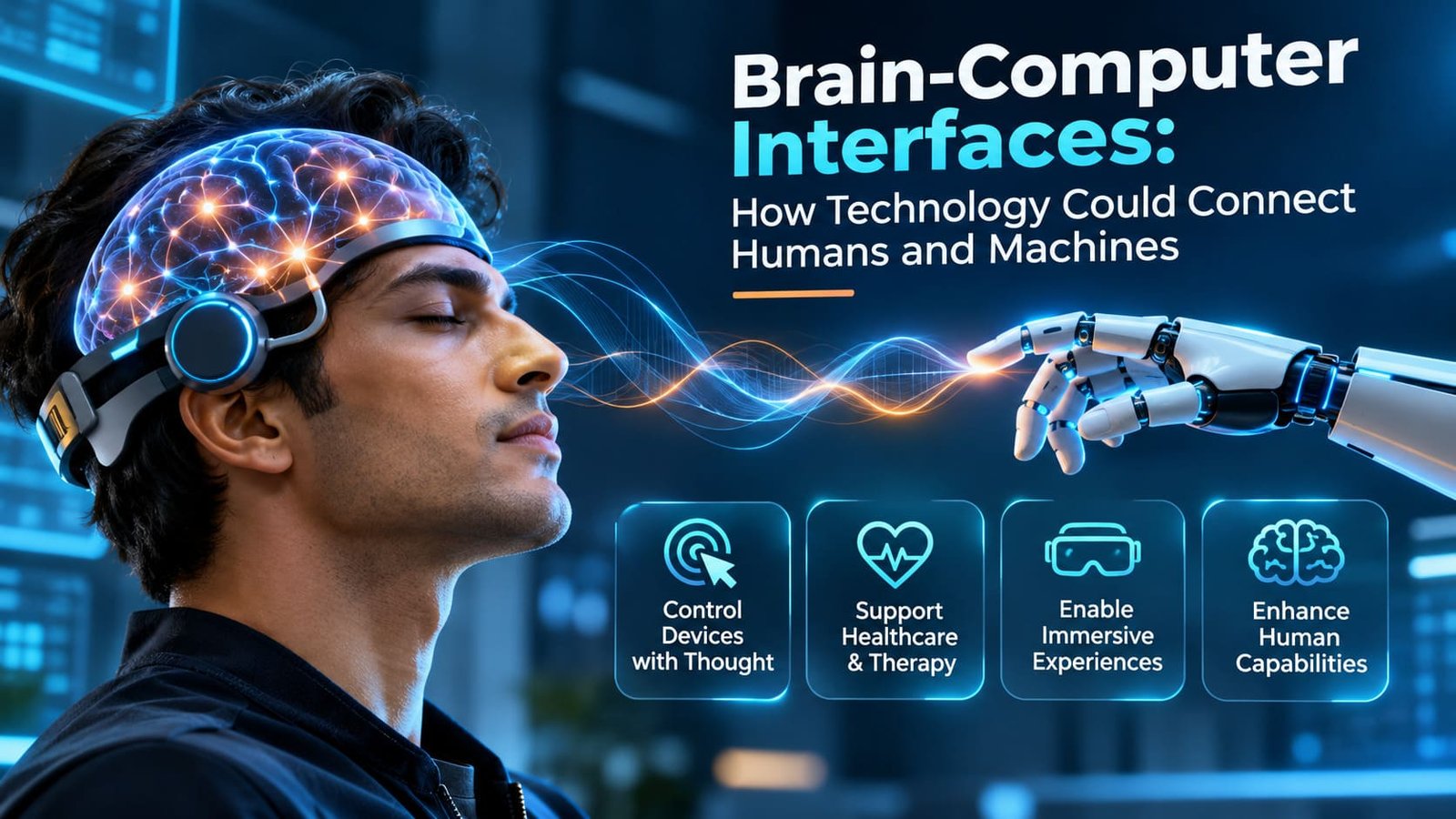
Imagine controlling a computer, operating a robotic arm, or communicating with someone without moving your hands or speaking. What once seemed like science fiction is gradually becoming possible with a technology called Brain-Computer Interfaces (BCIs).
Brain-Computer Interfaces are creating new possibilities for communication between the human brain and machines. Instead of depending entirely on keyboards, touchscreens, or voice commands, these systems use brain activity to interact with external devices.
This emerging technology has the potential to transform healthcare, assistive communication, robotics, and human-computer interaction. It could also help people with physical disabilities perform certain activities more independently.
Although Brain-Computer Interfaces are still developing, researchers are making progress toward creating more effective and accessible systems. Understanding how this technology works and where it could be used helps explain why it is attracting so much attention.
What Are Brain-Computer Interfaces?
A Brain-Computer Interface is a technology that establishes a direct communication pathway between the brain and an external device. It captures brain signals, processes the information, and translates specific patterns into commands that a computer or machine can understand.
Normally, the brain communicates with the body through the nervous system to control movement and other activities. For example, when a person wants to move their hand, the brain produces signals that help coordinate that action.
A BCI system attempts to interpret selected patterns of brain activity and convert them into instructions for external devices. This may allow someone to move a computer cursor, select letters on a screen, or control a robotic limb.
It is important to understand that BCIs do not automatically read every human thought. They are designed to recognize specific brain activity patterns associated with particular tasks or intentions.
How Does Brain-Computer Interface Technology Work?
Brain-Computer Interfaces combine sensors, signal-processing techniques, and computer algorithms to translate brain activity into useful actions. The process generally involves four important stages.
1. Collecting Brain Signals
The first step involves measuring electrical activity generated by the brain. Depending on the system, sensors may be placed on the scalp or electrodes may be implanted inside the skull.
Electroencephalography (EEG) is a commonly used non-invasive method that records brain activity through sensors attached to the scalp. It allows researchers to collect neural signals without requiring surgery.
Implanted electrodes can capture more detailed neural activity, but they involve medical procedures and additional safety considerations.
2. Processing Brain Activity
Brain signals are complex and often contain unwanted noise. A BCI system uses signal-processing methods to identify patterns that may represent a person’s intended action.
Algorithms analyze the collected information and separate useful signals from background interference. Artificial intelligence and machine learning can also help recognize patterns and improve the system’s performance.
3. Converting Signals Into Commands
Once meaningful patterns are identified, the system translates them into instructions that an external device can understand.
For example, a particular brain activity pattern may represent moving a cursor, selecting a letter, or controlling a robotic hand.
The accuracy of this stage depends on signal quality, system design, and how effectively the system has been trained.
4. Controlling External Devices
The final stage involves sending the translated commands to an external device. This could be a computer, communication system, wheelchair, or robotic limb.
Some systems also provide feedback to users, allowing them to understand whether their intended action has been successfully completed.
Major Types of Brain-Computer Interfaces
Brain-Computer Interfaces are generally classified according to how they collect signals from the brain. Each approach has different advantages, limitations, and medical considerations.
1. Non-Invasive Brain-Computer Interfaces
Non-invasive BCIs collect brain activity without requiring surgery. EEG-based systems are a common example because their sensors are attached to the scalp.
These systems are generally easier to use and avoid the surgical risks associated with implanted devices. However, the signals collected through the scalp can be less detailed and may be affected by muscle movements or environmental interference.
2. Invasive Brain-Computer Interfaces
Invasive BCIs use electrodes implanted directly into brain tissue. Because these electrodes are positioned closer to the source of neural activity, they can capture more detailed signals.
Researchers are exploring these systems for applications such as controlling robotic limbs and supporting communication for people with severe movement limitations.
However, implantation requires surgery and involves potential risks, including infection, tissue damage, and long-term device complications.
3. Partially Invasive Brain-Computer Interfaces
Partially invasive systems place electrodes inside the skull but outside the brain tissue. They are designed to collect brain signals without inserting electrodes directly into the brain.
These systems offer a different balance between signal quality and surgical considerations. Their applications are still being explored through ongoing research.
How Brain-Computer Interfaces Are Connecting Humans and Machines
The potential of Brain-Computer Interfaces becomes clearer when we examine their practical applications across different industries.
1. Helping People With Physical Disabilities
One of the most promising applications of BCI technology is supporting people who have lost the ability to move or communicate because of paralysis or neurological conditions.
A person who cannot use their hands may be able to interact with a computer through decoded brain signals. Researchers are also developing systems that allow users to control robotic arms and assistive equipment.
These developments could create new opportunities for independence and improve access to everyday activities.
2. Improving Human-Computer Interaction
Most people interact with computers through keyboards, mice, touchscreens, and voice assistants. BCIs introduce another possible way to communicate with digital systems.
For example, users may eventually control computer cursors or select items on a screen through specific patterns of brain activity.
This approach could become particularly useful for individuals who find traditional input methods difficult or impossible to use.
3. Supporting Healthcare and Rehabilitation
Healthcare is an important area of BCI research. Scientists are investigating how these systems could support rehabilitation for individuals recovering from strokes or living with neurological injuries.
Some rehabilitation approaches combine brain activity with physical feedback or stimulation to encourage movement training.
Although early research is promising, results depend on the individual and the specific treatment. Many applications still require further clinical investigation.
4. Controlling Robotic Devices
Robotics is another field where Brain-Computer Interfaces could create new opportunities.
A BCI system can potentially translate a person’s intended movement into commands for a robotic arm or another connected device. This could help people perform activities that would otherwise require physical movement.
Future research may also explore how these systems could support remote operations, assistive robotics, and specialized industrial applications.
5. Exploring New Forms of Communication
Communication can be challenging for people who have lost the ability to speak or move normally.
Researchers are developing BCI systems that can interpret attempted speech or identify intended words through brain activity. These technologies could provide alternative communication methods for people with certain neurological conditions.
In the future, improved systems may help individuals express their needs and communicate more easily with family members and caregivers.
The Role of Artificial Intelligence in Brain-Computer Interfaces
Artificial intelligence is becoming an important part of Brain-Computer Interface development because brain signals are complex and can vary from person to person.
AI and machine learning algorithms help identify patterns in neural activity and convert them into useful commands.
Some important contributions of AI include:
- Signal Recognition: AI algorithms identify meaningful patterns within complex brain signals.
- Improved Accuracy: Machine learning can help systems adapt to individual users and reduce recognition errors.
- Faster Processing: Advanced algorithms can analyze brain activity and generate commands with less delay.
- Personalized Interaction: Systems can adjust to individual brain activity and interaction patterns.
- Continuous Learning: Some models can improve their ability to recognize specific signals through repeated interactions.
Combining AI with BCI technology could make communication between humans and machines more responsive. However, reliable signal collection and accurate interpretation remain essential.
Benefits of Brain-Computer Interface Technology
Brain-Computer Interfaces could offer several benefits across healthcare, computing, and assistive technology.
Greater Independence
People with limited physical movement may gain new ways to interact with computers, communication systems, and connected devices.
Alternative Communication
BCIs could provide additional communication options for individuals who cannot speak or use conventional input devices.
Advanced Rehabilitation
Researchers are exploring how these systems can support physical rehabilitation and movement training.
Improved Human-Machine Interaction
The technology could introduce new ways for people to control digital systems and robotic equipment.
More Accessible Technology
BCI development could encourage the creation of devices designed around accessibility and individual requirements.
Despite these potential benefits, their effectiveness depends on continued research, clinical testing, and technological improvements.
Challenges and Limitations of Brain-Computer Interfaces
Although Brain-Computer Interfaces offer exciting possibilities, several challenges must be addressed before the technology becomes widely accessible.
1. High Development Costs
Developing BCI systems requires specialized equipment, neuroscience research, software development, and technical expertise.
Implantable systems may also involve expensive surgical procedures and long-term medical support. These costs can limit access for people who could benefit from the technology.
2. Signal Accuracy and Reliability
Brain signals are not always consistent. They can change depending on concentration, fatigue, movement, and surrounding conditions.
Non-invasive systems may also experience interference from eye movements, muscle activity, and other sources of noise.
Improving signal quality and maintaining consistent performance are important research priorities.
3. Privacy and Data Security
Brain-computer interfaces collect information about neural activity, making data protection an important consideration.
Developers must consider how this information is collected, stored, processed, and shared. Unauthorized access or misuse could create serious privacy concerns.
Strong security practices and clear user consent will be essential as the technology develops.
4. Medical and Safety Risks
Invasive BCI systems require surgical implantation, which can introduce risks such as infection, inflammation, and complications involving implanted equipment.
Long-term safety is another important consideration because devices may require maintenance, replacement, or medical monitoring.
5. Accessibility and Ease of Use
Some BCI systems require technical setup, user training, and repeated calibration. This can make them difficult to use without specialized assistance.
Researchers need to develop systems that are comfortable, affordable, reliable, and simple enough to operate outside controlled laboratory environments.
What Does the Future Hold for Brain-Computer Interfaces?
The future of Brain-Computer Interfaces will depend on progress in neuroscience, artificial intelligence, medical engineering, and computing.
One important research direction involves developing smaller and more comfortable devices that can collect brain signals effectively. Improved sensors and signal-processing techniques could make non-invasive systems more practical.
Researchers are also working to improve communication between the brain and external devices. Future systems may support more accurate cursor control, robotic movement, and communication.
Artificial intelligence could make these systems more adaptable by learning how individual users produce and respond to different brain signals.
Healthcare is likely to remain an important area of development, particularly for people living with paralysis and conditions affecting movement or communication. However, widespread adoption will require evidence of safety, effectiveness, affordability, and long-term reliability.
Rather than replacing traditional ways of interacting with technology, BCIs may provide additional options for people who need more accessible ways to communicate and control devices.
Conclusion
Brain-Computer Interfaces represent an important step toward creating a closer connection between humans and machines. By translating patterns of brain activity into commands, this technology is opening new possibilities in communication, assistive devices, healthcare, and robotics.
Although challenges involving accuracy, cost, safety, and privacy remain, continuous research is improving how these systems work.
The most meaningful impact of BCIs may not be about making humans more technologically advanced. It could be about helping people communicate, regain independence, and interact with the world in new ways.
As research progresses, Brain-Computer Interfaces could become an important part of a future where technology responds more naturally to human intentions.
Frequently Asked Questions
1. What are Brain-Computer Interfaces?
Brain-Computer Interfaces (BCIs) are technologies that capture brain activity and translate specific signals into commands, allowing people to interact with computers and external devices without traditional physical input methods.
2. How do Brain-Computer Interfaces work?
Brain-Computer Interfaces collect electrical signals from the brain using sensors or implanted electrodes. Specialized software processes these signals, identifies meaningful patterns, and converts them into commands that control connected devices.
3. Can Brain-Computer Interfaces help people with disabilities?
Yes. BCI technology may help people with paralysis or limited mobility communicate, operate computer systems, and control assistive devices such as robotic arms. Researchers are continuing to improve these applications.
4. What is the future of Brain-Computer Interfaces?
The future of BCIs may include better communication systems, advanced rehabilitation technologies, improved robotic control, and more natural human-computer interaction. Progress will depend on improvements in safety, accuracy, affordability, and privacy.