For many people, hearing difficulties do not begin with a complete loss of hearing. They may start with small, everyday moments: asking someone to repeat a sentence, struggling to follow a conversation in a crowded restaurant, or turning up the television because the dialogue sounds unclear. Over time, these moments can become frustrating and affect how people communicate with family, friends, and colleagues.
Traditionally, hearing aids have been the main solution for people experiencing hearing loss. However, cost, access to professional services, and concerns about wearing a dedicated hearing device can prevent some people from exploring available options.
In 2026, wireless earbuds are becoming part of this conversation. Advances in artificial intelligence (AI), sound processing, and personalized audio technology are allowing selected earbuds to do more than play music or answer phone calls. Some models now offer hearing tests, sound amplification, and features designed to make speech easier to understand.
This development does not mean every pair of wireless earbuds can replace a hearing aid. Instead, it shows how familiar consumer technology could make certain forms of hearing support more convenient and accessible.
What Are AI-Powered Wireless Earbuds?
AI-powered wireless earbuds are audio devices that use intelligent software and digital sound processing to improve listening experiences. Depending on the model, they may recognize different sound environments, reduce unwanted background noise, adjust audio settings, or help users focus on speech.
Unlike basic earphones, which mainly reproduce audio from a connected device, advanced earbuds can process sounds picked up by their microphones. Their software can then modify the audio before delivering it to the listener.
For example, imagine trying to speak with a friend in a busy café. Conversations from nearby tables, kitchen noise, and music may make it difficult to understand every word. Certain advanced earbuds can use directional microphones and noise-processing features to reduce some distractions.
When specifically designed and authorized for hearing assistance, compatible earbuds can also amplify selected sounds according to a user’s hearing needs.
The important distinction is that AI audio enhancement, sound amplification, and medically intended hearing-aid functionality are not the same thing. The available features depend on the device, its software, and the user’s location.
How AI Is Changing Hearing Assistance in 2026
AI is helping manufacturers move beyond simple volume controls toward more personalized listening experiences. Several developments are making this technology increasingly relevant to hearing support.
1. Personalized Sound Amplification
People do not experience hearing difficulties in exactly the same way. Some may struggle to hear higher-pitched voices, while others may have difficulty understanding speech in particular environments.
Selected hearing-support devices can use hearing-test results or an individual’s hearing profile to adjust sound amplification. Rather than increasing every sound equally, the system can emphasize particular frequencies that the listener has difficulty hearing.
This personalized approach may make everyday conversations more comfortable for eligible users. However, the quality of the results depends on the device’s capabilities, proper fitting, and the individual’s hearing needs.
2. Better Speech Clarity in Noisy Environments
Background noise is one of the biggest challenges for people who struggle to hear conversations. In a crowded market, office, or family gathering, several people may speak at once.
AI-assisted audio processing can help distinguish speech from competing sounds. Directional microphones can also prioritize sound coming from a particular direction, depending on the device and listening mode.
These features may improve speech clarity in some situations, but they cannot eliminate every distraction. Results vary according to the environment, the placement of the microphones, and the user’s hearing profile.
3. Hearing Tests Through Compatible Devices
Another important development is the integration of hearing assessments into consumer technology.
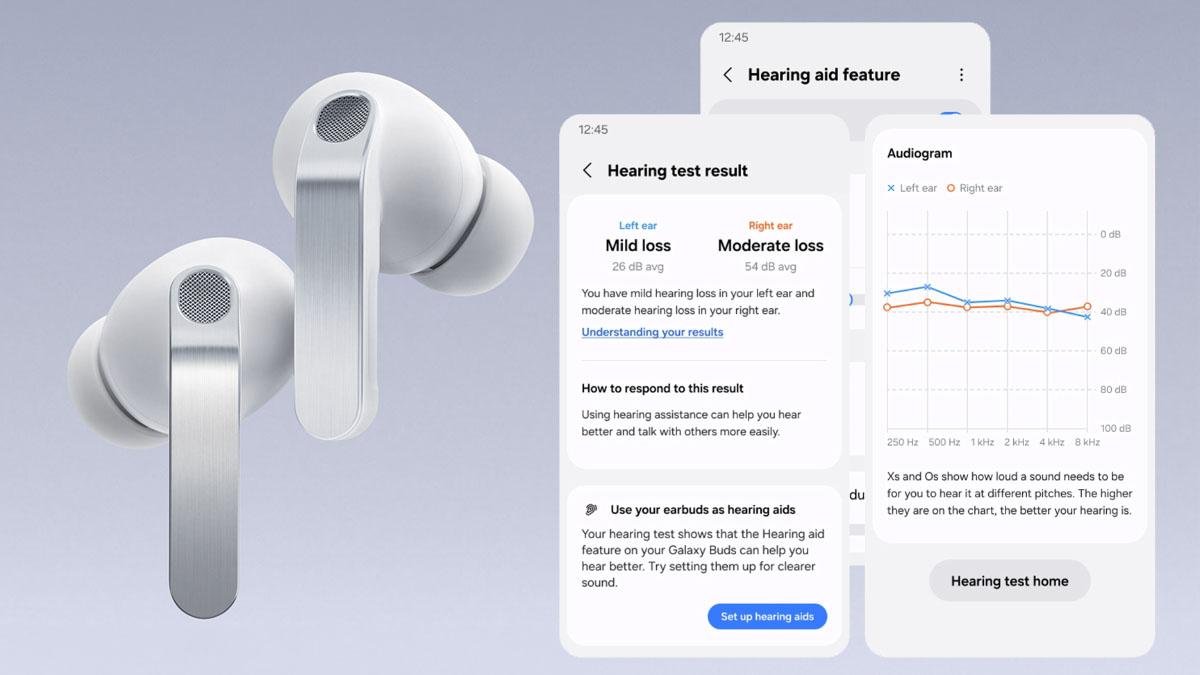
Some compatible earbuds can conduct guided hearing tests through a connected smartphone or device. The results may help users understand whether they have difficulty hearing certain frequencies and whether further assessment is appropriate.
Samsung announced on August 11, 2026, that its Galaxy Buds Hearing Aid feature had received clearance from the US Food and Drug Administration (FDA). Samsung said the planned feature would support eligible adults with perceived mild to moderate hearing loss and work alongside its hearing-test functionality.
The company announced availability for compatible Galaxy Buds3 Pro and Galaxy Buds4 Pro in the United States and select approved markets in the fourth quarter of 2026. Availability and compatibility depend on the market and supported devices. Read Samsung’s announcement.
This is a significant example of consumer earbuds moving into regulated hearing assistance. It does not mean all wireless earbuds have received the same authorization or offer equivalent performance.
4. Convenient Everyday Listening
One reason this technology is attracting attention is familiarity. Many people already use wireless earbuds for calls, music, video meetings, and entertainment.
When a compatible device also offers hearing-support features, users may be able to access multiple functions through a product they already understand. This can make the experience feel less complicated than learning an entirely new type of device.
Convenience matters, particularly for people who are hesitant to explore hearing assistance. Still, earbuds must fit comfortably, provide suitable sound quality, and support the user’s specific needs before they can be considered a practical option.
Are Wireless Earbuds a More Affordable Alternative to Hearing Aids?
Cost is an important part of the discussion, but the answer depends on the device and the person’s hearing requirements.
Traditional prescription hearing aids can involve professional assessments, fitting, follow-up appointments, and ongoing adjustments. These services can add to the total cost, although they also provide important clinical support.
Consumer earbuds may already be part of someone’s technology budget. A compatible model with authorized hearing-aid functionality could therefore provide a convenient option for some adults with mild to moderate hearing loss.
However, a lower purchase price does not automatically make a product an effective or suitable hearing aid. Standard wireless earbuds may offer only basic sound amplification or accessibility features, and some premium models can cost as much as or more than entry-level hearing devices.
Before purchasing a device, consumers should compare its total cost, supported hearing features, compatibility requirements, warranty, battery life, and any additional accessories or services. They should also check whether the hearing-aid feature is available and authorized in their country.
For people with more complex hearing needs, professional hearing aids may offer fitting options and support that general-purpose earbuds cannot provide.
Wireless Earbuds vs. Traditional Hearing Aids
Although the two technologies may look similar, they serve different purposes and are not interchangeable in every situation.
| Feature | AI-enabled wireless earbuds | Traditional hearing aids |
|---|---|---|
| Main purpose | Audio entertainment, calls, and selected hearing-support functions | Designed primarily to support people with hearing loss |
| Sound adjustment | Depends on the model and available software | Usually includes hearing-specific fitting and adjustment options |
| Hearing assessment | Some models offer built-in tests | Often fitted using professional hearing assessments |
| Background noise management | May include noise reduction and speech-processing features | Often includes hearing-focused noise management |
| Professional support | May be limited or vary by product | Can include audiologist or hearing-care professional support |
| Best use | Depends on the device’s approved purpose and the user’s needs | Depends on the hearing loss and the suitability of the fitted device |
The most suitable option is not necessarily the newest or least expensive one. It is the device that safely and effectively meets the individual’s hearing needs.
Who Could Benefit From AI-Powered Hearing Earbuds?
AI-enabled earbuds with appropriate hearing-support functionality may be useful for some adults who experience mild to moderate hearing difficulties.
Potential users may include:
- Adults who struggle with conversations: People who frequently miss words when speaking with others may benefit from suitable speech-enhancement features.
- People exploring hearing support for the first time: Familiar consumer devices may provide an accessible starting point, provided they have the appropriate functionality.
- Technology-conscious users: People comfortable with smartphones and companion apps may find digital setup and sound personalization convenient.
- People seeking additional listening flexibility: Some users may appreciate having entertainment, phone calls, and hearing-support features in one device.
These examples are not a substitute for an individual assessment. The suitability of a device depends on the type and degree of hearing loss, comfort, safety, and the product’s approved intended use.
The Limitations of AI Hearing Technology
Despite its potential, AI-powered hearing assistance still has limitations. Understanding them helps consumers make more informed decisions.
Not Every Earbud Is a Hearing Aid
Many wireless earbuds advertise noise cancellation, transparency modes, or adaptive audio. These features can improve listening comfort, but they do not automatically make a product a hearing aid.
Consumers should check the manufacturer’s documentation and the applicable regulatory status rather than relying on marketing descriptions alone.
Performance Varies Across Environments
An earbud may work well during a one-to-one conversation but struggle in a noisy restaurant or a room where several people are speaking simultaneously. AI can help process sound, but it cannot guarantee perfect speech understanding.
Battery Life and Comfort Matter
Hearing support may require users to wear their earbuds for extended periods. Battery life, charging needs, ear-tip fit, skin sensitivity, and comfort can all affect everyday usability.
Privacy Should Not Be Overlooked
Some smart audio products connect to mobile apps or use cloud-based services for certain functions. Users should review microphone permissions, data collection practices, and privacy settings, particularly when an app records or processes conversations.
Professional Assessment Remains Important
Hearing difficulties can have different causes, and not all of them are suitable for self-managed amplification. Earbuds should not delay medical care when hearing changes suddenly or are accompanied by pain, dizziness, or other concerning symptoms.
A hearing-care professional can help determine the type of hearing difficulty involved and whether earbuds, hearing aids, or another treatment approach is appropriate.
What Does the Future Hold for AI-Powered Hearing Assistance?
The development of hearing-support earbuds reflects a broader trend: everyday consumer devices are gaining features once associated with specialized products.
As sound-processing algorithms improve, future devices may become better at adapting to different listening environments, personalizing audio, and integrating hearing-related information into digital health platforms. Manufacturers may also continue to explore more convenient testing and fitting experiences.
However, future progress will depend on more than AI performance alone. Reliable testing, comfortable designs, battery efficiency, data privacy, clinical evidence, and regulatory oversight will all influence how useful these products become.
Affordability and availability will also matter. A feature may be technically impressive but still offer limited value if it works only with a narrow range of phones, is unavailable in a particular country, or does not meet a person’s hearing needs.
The most meaningful advances will be those that combine accessible technology with dependable performance and appropriate professional support.
Conclusion
AI-powered wireless earbuds are expanding the possibilities for everyday hearing assistance in 2026. Personalized amplification, speech-processing features, and built-in hearing tests are helping selected devices move beyond entertainment and toward more practical listening support.
For some adults with mild to moderate hearing loss, compatible hearing-support earbuds may offer a convenient alternative worth exploring. For others, professionally fitted hearing aids and ongoing hearing care may remain the better choice.
The key is to look beyond the label “AI-powered.” Consumers should understand which features a product actually offers, whether its hearing-aid functionality is authorized in their location, and how well it meets their individual needs.
As this technology develops, its greatest benefit may be making conversations easier to access and encouraging more people to take their hearing health seriously.
Frequently Asked Questions
1. How do AI-powered wireless earbuds help with hearing?
AI-powered wireless earbuds can use sound processing, noise reduction, and personalized amplification to make speech easier to hear. The available features depend on the device, and not all earbuds are designed to assist people with hearing loss.
2. Can wireless earbuds replace traditional hearing aids?
Some authorized hearing-support earbuds may help adults with mild to moderate hearing loss. However, ordinary wireless earbuds cannot automatically replace hearing aids, and people with hearing difficulties may benefit from professional assessment and personalized treatment.
3. Are AI-powered hearing earbuds affordable in 2026?
Some wireless earbuds may cost less than prescription hearing aids, but prices vary by model and features. Buyers should compare the total cost, hearing-support capabilities, compatibility, and professional care requirements before choosing a device.
4. Are AI-powered wireless earbuds suitable for everyone?
No. Their suitability depends on the person’s hearing needs, the device’s capabilities, and its approved use. Anyone experiencing hearing difficulties should consult a qualified hearing-care professional to identify an appropriate option.