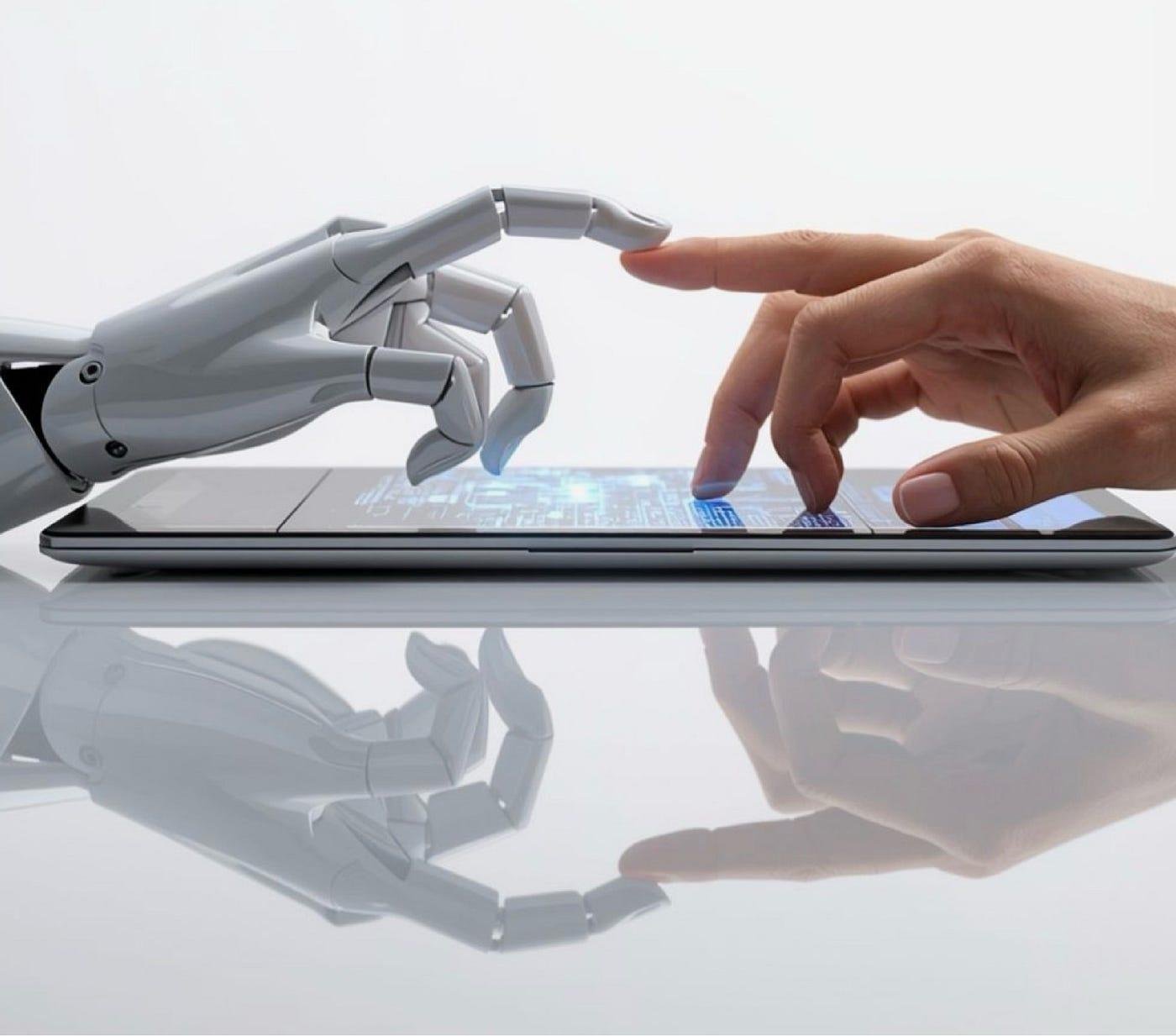
Think about how often people interact with technology throughout the day. We ask our phones for directions, use digital assistants to answer questions, depend on smart devices to manage daily activities and turn to artificial intelligence when we need help with something unfamiliar.
A few years ago, many of these activities seemed like things we might experience in the distant future. Today, they are becoming part of normal life.
But technology is moving beyond simply helping people complete tasks. Machines are becoming better at understanding language, recognizing patterns, responding to instructions and adapting to individual preferences.
This change raises an interesting question: What will our relationship with machines look like ten years from now?
By 2035, people may interact with intelligent systems in ways that feel more natural and personal. We might have AI assistants that understand our working habits, robots that help with physical tasks and digital tools that make learning and communication easier.
However, the future of human-machine relationships is not just about making machines smarter. It is also about understanding how much we should depend on them, whether we can trust their decisions and how we can maintain the human qualities that make our lives meaningful.
1. Machines May Become Part of Our Everyday Routine
Most people already use technology without thinking much about it. Checking the weather, setting reminders, searching for information and making online payments have become ordinary activities.
In the coming years, intelligent machines could become even more involved in these routines.
Imagine waking up in the morning and having a digital assistant organize your schedule, remind you about an important appointment and suggest the best time to complete your daily tasks. Instead of giving separate instructions for everything, you might simply explain what you need.
These systems could learn from regular interactions and provide suggestions based on individual preferences.
For some people, this could save time and reduce everyday stress. For others, it might create a new level of dependence on digital assistance.
The important thing is to remember that technology should make everyday life easier without taking away our ability to manage it independently.
2. Working With Machines Could Become Normal
Think about a manufacturing workplace where employees spend hours completing repetitive or physically demanding tasks. Now imagine having an intelligent robot assist with those activities while employees focus on quality, safety and problem-solving.
This is one example of how human-machine collaboration could develop over the next decade.
AI systems and robotics may become more common across manufacturing, logistics, healthcare, education and office environments.
Rather than handling every responsibility independently, employees could work alongside machines that help organize information, complete routine processes and improve efficiency.
For example, an office professional might use AI to prepare an initial report, but the final decisions would still require human experience and judgment.
This change may also encourage people to develop new skills. Understanding how to work with intelligent technology could become just as important as understanding the tools used in a particular profession.
The future workplace will not necessarily be about humans competing against machines. It could be about finding better ways for both to contribute.
3. Talking to Machines May Feel More Like Talking to People
Remember when using a computer meant learning complicated commands and navigating different menus?
Technology has already moved a long way from that experience. Today, people can ask questions using everyday language and receive responses within seconds.
Over the next decade, communication with machines could become even more natural.
AI assistants may understand spoken instructions, recognize visual information and remember relevant details from earlier interactions. This could make digital tools easier to use, particularly for people who struggle with traditional interfaces.
For instance, someone could show an AI assistant a picture of a household problem and explain what is happening. The assistant might help identify possible causes and suggest practical next steps.
Students could also have more interactive learning experiences by asking questions and receiving explanations that match their understanding.
However, sounding human does not necessarily mean a machine understands people in the same way another person does. It is important to recognize the difference between a convincing response and genuine human understanding.
4. Digital Companions Could Become More Common
One of the more interesting developments in artificial intelligence is the way people interact with conversational systems.
Some individuals already use AI assistants to discuss personal interests, explore ideas, practise communication or simply have a conversation when they have free time.
As these systems become more personalized, digital companions could become a more familiar part of everyday technology.
For example, an older person living alone might use a conversational assistant for reminders, entertainment and regular interaction. Someone learning a new skill might use an AI companion to practise and build confidence.
These applications could offer convenience and support, particularly when human assistance is not immediately available.
Still, there is an important limitation. AI can respond to emotional language and produce supportive messages, but it does not experience happiness, sadness or care as humans do.
Technology should provide additional support without replacing the relationships people build with friends, family and their communities.
5. Trust Will Decide How Much We Depend on Machines
Imagine receiving an important recommendation from an AI system. The answer sounds confident, the explanation appears logical and everything seems correct.
Would you trust it immediately?
This is one of the biggest questions surrounding the future of human-machine relationships.
As people begin using AI for more important activities, trust will become increasingly important. A mistake in a casual conversation may not matter much, but incorrect information involving money, employment or healthcare could have serious consequences.
People need to know how these systems work, where their information comes from and when their answers might be unreliable.
Building trust will require several things:
- Honest communication: AI systems should make their limitations clear.
- Data protection: Personal information must be handled responsibly.
- Reliable information: Important answers should be supported by trustworthy sources.
- Human responsibility: People should remain involved in decisions that require judgment.
- Clear accountability: Organizations must take responsibility for the technologies they develop and deploy.
A machine should not be trusted simply because it provides a quick answer. People need reasons to trust the information it produces.
6. Learning Could Become More Personal
Every student learns differently. Some understand a subject through practical examples, while others need more time, repetition or visual explanations.
Traditional classrooms cannot always provide individual attention to every student. This is where AI-powered learning tools could make a difference.
Imagine a student struggling to understand a science concept. Instead of reading the same explanation repeatedly, the student could ask an AI assistant to explain it using a real-life example.
Another student learning a foreign language could practise conversations and receive suggestions for improving pronunciation or sentence structure.
Teachers may also use AI tools to prepare learning materials, organize assessments and identify areas where students need additional support.
However, education is not only about collecting information or getting answers quickly. Students also need encouragement, discipline, curiosity and opportunities to develop their own thinking.
Technology can support teachers, but the human connection between students and educators remains important.
7. Healthcare May Benefit From Better Human-Machine Collaboration
Healthcare is another area where technology could make everyday experiences more convenient.
Doctors and healthcare professionals already use digital systems to manage patient records, review medical images and organize information. AI may help improve some of these processes by identifying patterns and assisting with information analysis.
In the future, connected health devices could also help people monitor certain health measurements and share information with healthcare providers.
For example, someone managing a long-term condition might use a connected device to record relevant measurements. An AI-powered system could organize these records so a healthcare professional can review them more easily.
This may help make certain healthcare processes more informed and efficient.
However, medical decisions are personal and often complex. A machine cannot replace the clinical experience, professional responsibility and human understanding required in patient care.
The best results will come when technology supports healthcare professionals rather than attempting to replace them.
8. Privacy Will Become a Bigger Part of the Conversation
The more people interact with intelligent systems, the more personal information those systems may receive.
Consider an AI assistant that knows your daily schedule, understands your preferences and helps organize your personal activities. Although this may sound convenient, it also raises an important question: How much personal information should a machine have access to?
People may share information without fully understanding how it is collected, stored or used.
This makes privacy an essential part of future human-machine relationships.
Technology companies will need to focus on protecting personal information, explaining data practices clearly and giving users meaningful control over their information.
Individuals also need to become more careful about what they share with digital platforms.
Convenience is valuable, but personal privacy should never become an unnecessary sacrifice.
9. Human Creativity Will Continue to Make a Difference
Artificial intelligence can generate written content, create images, analyze information and suggest new ideas. These abilities are already changing how people approach creative work.
But creativity is not simply about producing something new.
Think about a designer developing a campaign, a writer creating a meaningful story or an entrepreneur trying to solve a customer problem. Their ideas are often influenced by personal experiences, emotions, observations and an understanding of other people.
AI can assist with the process, but the person brings the context and purpose.
For example, an AI tool might suggest several marketing messages. A marketing professional still needs to understand which message feels appropriate for the audience and reflects the brand’s values.
The same applies to other professions. Machines can help people explore possibilities, but human judgment helps determine which possibilities are worth pursuing.
As technology improves, creativity, communication, empathy and independent thinking may become even more valuable.
10. Maintaining Human Connections Will Be the Real Challenge
There is something that technology cannot easily reproduce: the experience of being understood by another person.
A conversation with a friend, a discussion with a colleague or time spent with family involves more than exchanging information. These experiences are shaped by shared memories, emotions, personal understanding and trust.
As intelligent machines become more available, people may begin relying on them for activities that previously involved human interaction.
This is not necessarily a problem. Technology can help people communicate across distances, access information and overcome certain barriers.
The challenge appears when convenience starts replacing meaningful interaction.
For example, an AI assistant might help someone prepare for a difficult conversation, but it cannot replace the experience of having that conversation with another person.
The future should encourage people to use technology as a way to strengthen their lives, not as a reason to withdraw from human relationships.
What Could Human-Machine Relationships Look Like by 2035?
The next decade could bring changes across different areas of everyday life.
| Area | Possible changes |
|---|---|
| Daily activities | More personalized digital assistants |
| Workplaces | Greater collaboration with intelligent machines |
| Communication | Natural voice and visual interactions |
| Education | Individualized learning assistance |
| Healthcare | Better AI-supported information management |
| Personal support | More interactive digital companions |
| Decision-making | Intelligent suggestions with human oversight |
| Privacy | Greater attention to data protection |
These developments are possibilities, not guaranteed outcomes. Their success will depend on technological progress, responsible development and how people choose to use these systems.
How Can We Prepare for This Changing Relationship?
People do not need to become technology experts to prepare for the future. What matters is developing a healthy understanding of how machines can support everyday life.
Here are five practical ways to prepare:
- Learn how AI works: Understand what intelligent systems can do and where their limitations exist.
- Protect your personal information: Avoid sharing unnecessary sensitive details with digital platforms.
- Keep developing human skills: Focus on communication, creativity, critical thinking and problem-solving.
- Question important answers: Check important information instead of depending entirely on automated responses.
- Make time for real connections: Continue building relationships and sharing experiences with other people.
The aim should not be to depend on technology for everything. It should be to understand where technology is useful and where human involvement matters most.
Conclusion
The next decade could bring a significant change in the way people interact with machines. Intelligent assistants may become more familiar, robots could support more workplace activities and AI-powered tools may become part of education, healthcare and everyday routines.
But the future of technology should not be measured only by how much machines can accomplish.
It should also be measured by whether they help people live better, make informed decisions and create opportunities that were previously difficult to access.
Human experience, creativity, empathy and personal judgment will continue to matter. These qualities give meaning and direction to the technologies people build.
Perhaps the most important question is not whether machines will become more like humans. It is whether humans will use increasingly intelligent machines in ways that make society more thoughtful, connected and responsible.
.blog-faq { font-family: Arial, sans-serif; margin: 25px 0; } .blog-faq h2 { font-size: 30px; font-weight: 700; margin-bottom: 25px; line-height: 1.4; } .blog-faq .faq-item { margin-bottom: 25px; } .blog-faq h3 { font-size: 22px; font-weight: 700; line-height: 1.5; margin-bottom: 10px; } .blog-faq p { font-size: 18px; line-height: 1.8; margin: 0; color: #333333; } @media (max-width: 600px) { .blog-faq h2 { font-size: 26px; } .blog-faq h3 { font-size: 20px; } .blog-faq p { font-size: 17px; line-height: 1.7; } }Frequently Asked Questions
1. What are human-machine relationships?
Human-machine relationships describe how people interact and collaborate with technologies such as artificial intelligence, robots and digital assistants in everyday life.
2. How will human-machine relationships change by 2035?
By 2035, people may interact with more personalized AI assistants, intelligent robots and connected devices that support daily activities, communication and workplace tasks.
3. Can machines understand human emotions?
AI systems can identify emotional patterns in language, facial expressions and voice. However, recognizing emotions is different from genuinely experiencing human feelings.
4. Will AI and robots replace human workers?
AI and robots may automate certain repetitive activities, but many jobs will continue to require human creativity, practical experience, communication and decision-making.