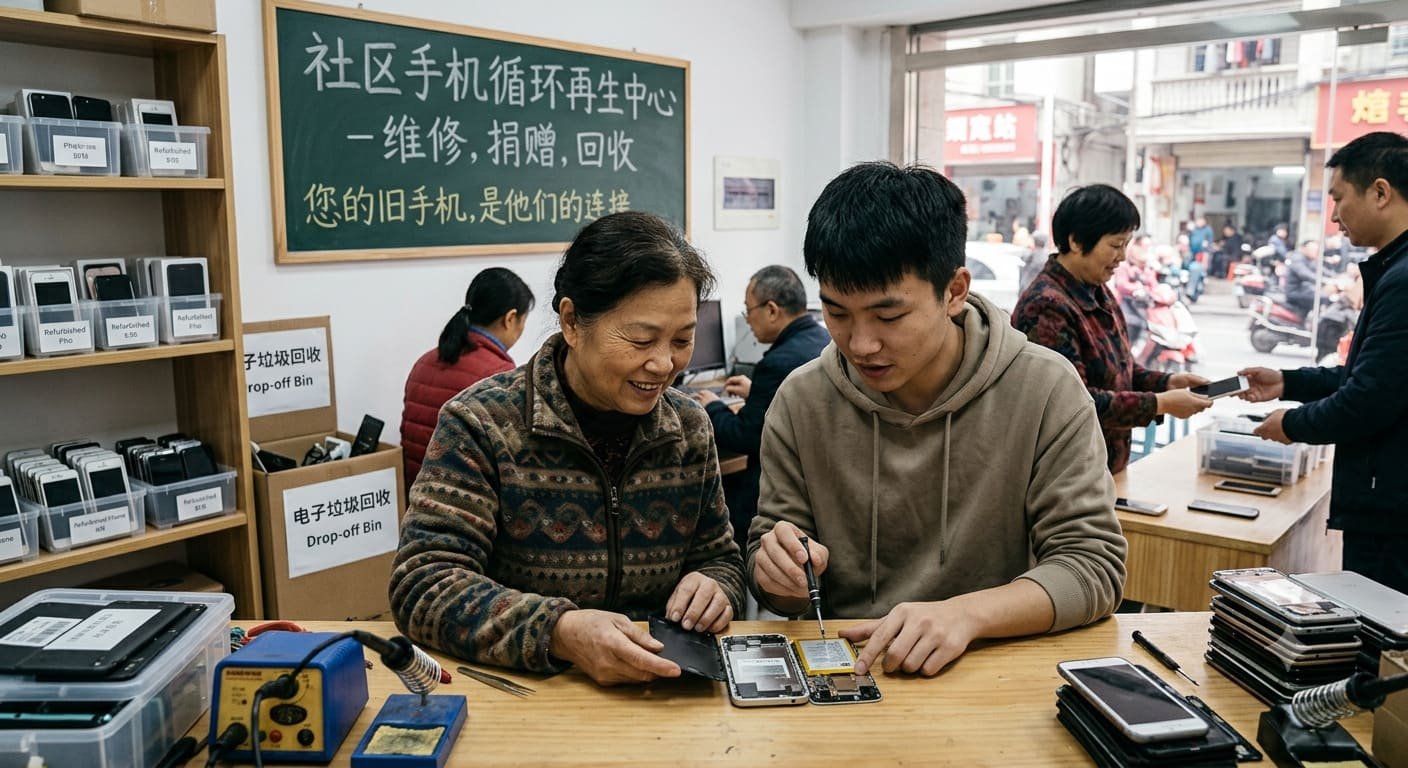
Mobile phones have become an essential part of modern life. People use them for communication, online shopping, banking, education, entertainment, and work. However, as new models enter the market, millions of older devices are left unused, sold second-hand, or thrown away. This creates a growing challenge: how can valuable materials be recovered while reducing electronic waste?
China is in a strong position to address this issue because it has a large electronics manufacturing industry and a huge mobile phone market. By improving phone repair, encouraging reuse, expanding recycling facilities, and designing more sustainable devices, the country can move toward a circular economy for mobile phones.
A circular economy focuses on keeping products and materials in use for as long as possible instead of following the traditional pattern of manufacturing, buying, and discarding. For China, this approach could reduce waste, conserve resources, create jobs, and support more sustainable economic growth.
1. Make Mobile Phones Easier to Repair
One of the most effective ways to reduce electronic waste is to extend the life of existing devices. Many phones are replaced even when their main components still work. A damaged screen, a weak battery, or a faulty charging port can make a perfectly useful phone inconvenient to use.
Manufacturers can help by making these components easier to replace. They can also provide affordable spare parts, publish clear repair instructions, and support independent repair businesses.
China could encourage manufacturers to consider repairability when designing new devices. Products that allow technicians to replace batteries, screens, and other common components without damaging the phone would be more suitable for long-term use.
Affordable repair services would also benefit consumers who cannot justify purchasing a new device every few years. Keeping phones in use for longer would reduce demand for replacement devices and the raw materials needed to manufacture them.
2. Build a Stronger Mobile Phone Recycling Network
Many people keep old phones in drawers because they do not know where to recycle them or worry about personal information stored on the devices. Others sell them through informal channels without knowing what happens afterward.
China can address these problems by making collection services more convenient and trustworthy. Mobile phone shops, electronics retailers, repair centres, community collection points, and online recycling platforms could work together to collect unwanted devices.
Consumers should be able to arrange doorstep collection, return old phones when purchasing new ones, or drop devices at nearby collection centres. Clear information about collection locations and accepted products would make participation easier.
China has already identified the development of waste recycling networks and online recovery services as part of its broader circular-economy efforts. Extending these approaches to mobile phones could help more devices enter formal reuse and recycling channels.
3. Encourage the Reuse of Second-Hand Phones
Not every discarded phone needs to be dismantled. Some devices can continue serving users after inspection, cleaning, repair, and refurbishment.
A well-organised second-hand phone market can connect people who want affordable technology with owners who no longer need their devices. Students, budget-conscious families, small businesses, and people seeking a backup phone may all benefit from reliable refurbished products.
To build consumer confidence, China could strengthen standards for checking used phones. Sellers should provide accurate information about battery health, screen condition, storage capacity, repair history, and overall performance.
Refurbished devices should also come with transparent grading systems and reasonable warranties. These measures would help buyers distinguish properly tested phones from products with hidden defects.
Another important step is secure data removal. Before a phone changes ownership, the previous owner’s personal information must be erased using reliable procedures. Clear verification processes would help protect privacy and make second-hand purchases more attractive.
4. Recover Valuable Materials from Old Devices
Mobile phones contain materials that can be recovered and reused, including copper, aluminium, gold, and other metals. Their batteries and electronic components also contain valuable resources that require specialised handling.
When phones are thrown into ordinary rubbish, these materials may be lost. Poorly managed dismantling can also expose workers and the environment to hazardous substances.
China can improve resource recovery by investing in modern recycling facilities that safely separate components and recover useful materials. Automated sorting, advanced separation methods, and better material-processing technologies could improve efficiency and reduce unnecessary losses.
Recycling companies should follow environmental and worker-safety standards throughout the process. Batteries must be handled carefully to reduce the risk of fires, while hazardous components should be managed through appropriate treatment systems.
Recovered materials can then be supplied to manufacturers that use them in new electronics and other products. This would reduce reliance on newly extracted resources and help establish a more circular supply chain.
5. Design Phones for a Longer Life
Recycling is important, but it should not be the first and only solution. A sustainable mobile phone industry must also reduce waste before products reach the end of their useful lives.
Manufacturers can support this goal by using durable materials, providing long-term software updates, and designing devices that are easier to disassemble. Replacing a single component should not require discarding an otherwise functional phone.
Companies can also explore the use of recycled metals and plastics in phone components and packaging. However, recycled materials must meet appropriate quality and safety requirements to ensure that devices remain reliable.
Product design can influence the entire life cycle of a phone, from manufacturing to repair and eventual recycling. If circular principles are considered at the beginning of product development, recovering and reusing materials becomes easier later.
China could encourage manufacturers to report on product durability, repairability, recycled content, and end-of-life recovery. These measures would help businesses understand their environmental impact and identify opportunities for improvement.
6. Use Financial Incentives to Encourage Phone Returns
Convenience alone may not be enough to persuade every consumer to return an unused phone. Financial incentives can provide an additional reason to participate.
Trade-in programmes allow customers to receive money or a discount when they exchange an old device. Retailers and manufacturers could expand these programmes by offering transparent valuations based on the phone’s condition and resale potential.
China’s 2026 consumer goods replacement policy includes subsidies for eligible new digital products, including mobile phones. Such incentives can support device replacement, but a stronger circular approach should also ensure that replaced phones are collected, assessed, refurbished where possible, and recycled responsibly when necessary.
Governments could encourage participating retailers to provide convenient collection services and disclose how returned devices are handled. This would help connect new-phone purchases with genuine reuse and recycling rather than simply increasing consumption.
A successful incentive programme should reward responsible product circulation, not just the purchase of newer devices.
7. Support Small Businesses and Recycling Entrepreneurs
A circular economy can create opportunities beyond large electronics manufacturers. Repair shops, refurbishment businesses, collection services, testing centres, and specialist recycling companies can all play a role.
Small businesses could provide affordable repairs in neighbourhoods where official service centres are limited. Refurbishment companies could create employment by testing, repairing, grading, and reselling used phones.
Training programmes would help workers develop the technical skills needed to repair modern electronics and handle electronic waste safely. Local authorities could also support qualified recycling businesses by improving access to collection networks and reliable processing facilities.
However, growth in this sector should not come at the expense of environmental protection. Informal dismantling operations that use unsafe methods can create serious risks for workers and surrounding communities.
Clear licensing requirements, practical training, quality standards, and regular inspections would help the industry grow in a safer and more professional direction.
8. Improve Consumer Awareness and Participation
Even the best recycling infrastructure will struggle if people do not use it. Consumers need to understand what happens to old phones and why responsible disposal matters.
Public awareness campaigns can explain how to prepare a phone for resale or recycling, where to find authorised collection services, and how to protect personal information before handing over a device.
Simple instructions should cover backing up important files, signing out of accounts, removing SIM and memory cards, and securely erasing personal data. Consumers should also be advised to follow the manufacturer’s guidance for resetting their particular device.
Schools, universities, community organisations, retailers, and online platforms could help spread these messages.
Making recycling information easy to find would reduce confusion and encourage more people to participate. Clear labelling and accessible collection services would be especially useful for consumers in smaller towns and rural areas.
9. Build Partnerships Across the Mobile Phone Industry
No single organisation can establish a circular economy independently. Manufacturers, retailers, recycling companies, repair businesses, technology platforms, and government agencies need to work together.
Manufacturers can design products for repair and recovery. Retailers can collect old phones and explain trade-in options. Repair shops can extend device life, while recycling companies can recover materials from phones that can no longer be used.
Government agencies can establish consistent standards, monitor environmental performance, and encourage responsible business practices.
Digital tracking systems could also improve transparency by recording the movement of collected devices through approved channels. Such systems should protect consumer privacy while helping businesses verify that phones reach appropriate reuse or recycling facilities.
Better coordination would make it easier to measure results, identify gaps in the supply chain, and ensure that valuable materials return to productive use.
10. Overcome the Main Challenges
Although the opportunities are significant, China will need to address several challenges to build a successful mobile phone circular economy.
Consumer trust: People may hesitate to sell old phones because of privacy concerns or uncertainty about resale prices. Secure data-erasure procedures, transparent valuations, and reliable warranties can help address these concerns.
Low-cost replacement devices: When a new phone is affordable or heavily discounted, consumers may prefer replacement over repair. Affordable spare parts and accessible repair services can make extending a phone’s life more attractive.
Uneven recycling access: Collection and repair services may be easier to find in major cities than in smaller communities. Wider collection networks and online booking services can improve access.
Complex product design: Some devices are difficult to open or repair without specialised equipment. Better repairability standards and access to spare parts can reduce this barrier.
Inconsistent recycling quality: Informal or poorly managed operations may recover materials inefficiently or create environmental hazards. Stronger oversight and professional recycling infrastructure are essential.
Addressing these challenges requires long-term cooperation rather than relying on a single policy or technology.
Frequently Asked Questions
1. What is a circular economy for mobile phones?
A circular economy keeps mobile phones and their materials in use through repair, reuse, refurbishment, and recycling, reducing electronic waste and resource consumption.
2. Why is mobile phone recycling important for China?
Mobile phone recycling helps China recover valuable materials, reduce electronic waste, conserve natural resources, and create opportunities for recycling and repair businesses.
3. How can consumers support a circular economy?
Consumers can repair damaged phones, purchase reliable refurbished devices, trade in unwanted phones, and send unusable devices to authorised recycling facilities.
4. How can manufacturers reduce mobile phone waste?
Manufacturers can design durable and repairable phones, provide long-term software updates, supply replacement parts, use suitable recycled materials, and offer phone take-back programmes.