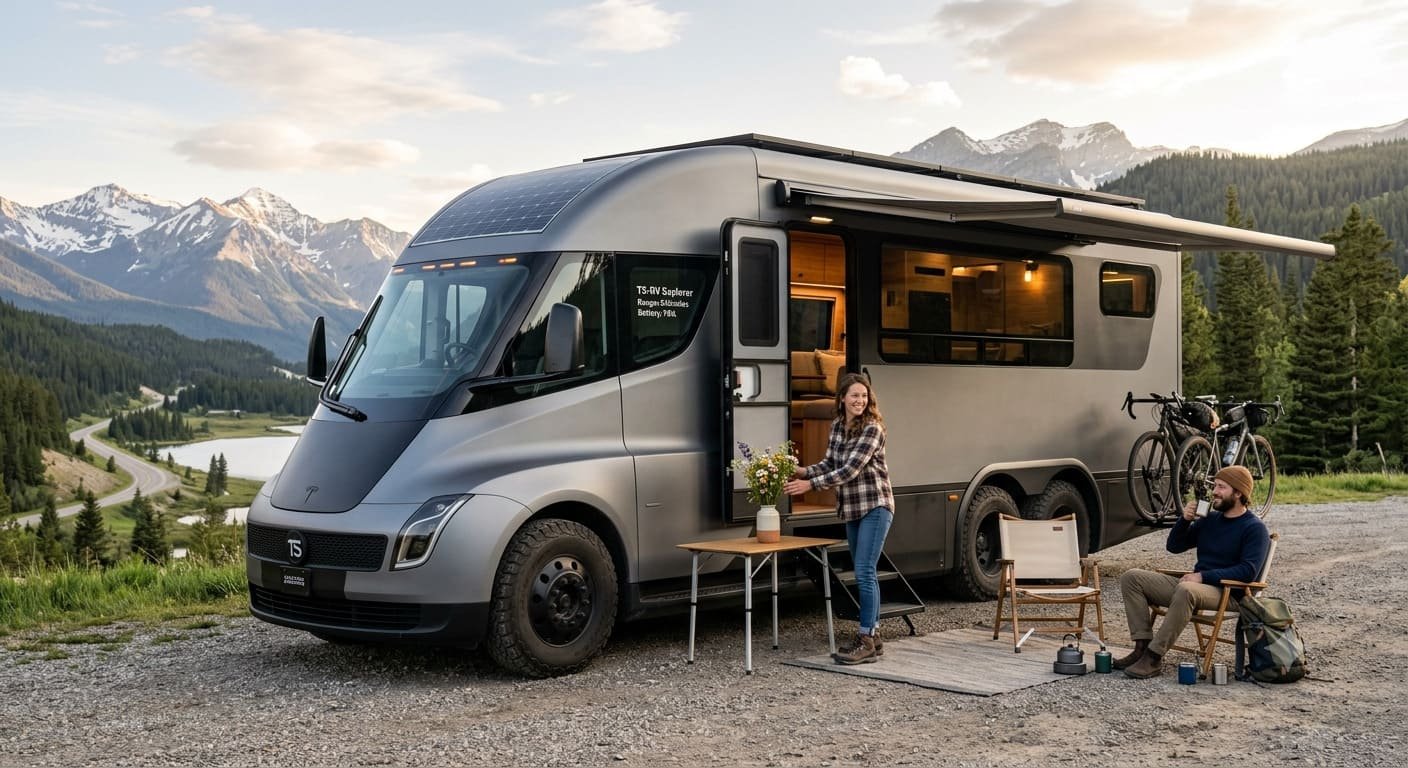
Imagine driving across the country in a futuristic electric vehicle that feels less like a truck and more like a home on wheels. You could travel through scenic mountain roads, stop beside a peaceful lake, and enjoy a comfortable living space without relying on a traditional diesel engine.
That is the idea behind the Tesla Semi motorhome concept. Tesla originally designed the Semi for heavy-duty freight transportation, but its distinctive appearance and electric powertrain have inspired people to imagine other possible uses for the vehicle.
What if a truck built to transport goods could one day become the foundation for a premium electric motorhome?
The idea is certainly interesting. However, there is one important detail to understand: Tesla has not announced an official Semi motorhome. For now, it is a concept that explores how electric truck technology could potentially be adapted for recreational travel.
Why Does the Tesla Semi Look Suitable for a Motorhome?
The Tesla Semi has a design that stands out from conventional heavy-duty trucks. Its curved front, streamlined body, and modern cabin give it a futuristic appearance that could inspire a very different style of recreational vehicle.
Traditional motorhomes are often built around existing vans, buses, or truck chassis. An electric truck-based motorhome could offer another approach, combining a heavy-duty vehicle platform with a purpose-built living area.
The attraction is not just about appearance. Electric vehicles can provide a quieter driving experience and avoid some of the routine maintenance associated with conventional combustion engines. The actual benefits would depend on the vehicle’s design and how it was converted.
For people who enjoy long road trips, the possibility of combining electric driving with a comfortable living space is an exciting one.
Could the Tesla Semi Offer Enough Range for Long Road Trips?
Range is one of the first things people consider when thinking about an electric motorhome. Nobody wants to spend a road trip constantly searching for the next charging station.
Tesla lists estimated range options of up to 325 miles for the Semi Standard Range and up to 500 miles for the Long Range version under specified operating conditions. These figures relate to the truck’s intended commercial use, not a motorhome conversion.
A converted vehicle would have different requirements. Additional furniture, appliances, water tanks, passengers, and changes to the vehicle’s body could affect its weight and aerodynamic performance. As a result, its real-world range might differ significantly from the advertised truck figures.
Even with these challenges, the Semi’s range capabilities make it an interesting platform to consider for future electric recreational vehicles.
Charging infrastructure would also play an important role. Before planning a long journey, owners would need to confirm that compatible charging facilities were available along their route.
What Could the Interior of a Tesla Semi Motorhome Look Like?
The biggest transformation would happen inside the living area. Instead of thinking only about cargo transportation, designers would need to consider how people sleep, cook, relax, and spend time on the road.
A custom motorhome concept could explore several features.
A Comfortable Bedroom
A dedicated sleeping area could make extended road trips more relaxing. Depending on the available space, designers might include a proper bed, storage compartments, adjustable lighting, and ventilation.
A Compact Kitchen
A practical kitchen could include a refrigerator, sink, induction cooktop, and storage for food and cooking equipment. Energy-efficient appliances would be particularly important because every electrical device would add to the vehicle’s energy requirements.
A Space for Work and Relaxation
Electric motorhomes could appeal to people who work remotely or enjoy spending several days in one location. A flexible living area with a table, comfortable seating, internet connectivity, and charging outlets could support both work and leisure.
A Bathroom and Storage Area
A premium conversion might include a compact bathroom, shower, water tanks, and storage for travel essentials. However, the design would need to balance comfort with vehicle weight, available space, and practical water management.
These ideas demonstrate what a future conversion might offer. They are not confirmed features of an existing Tesla Semi motorhome.
Could an Electric Truck Power the Entire Living Space?
Driving an electric motorhome is only part of the challenge. Travelers also need electricity for lighting, refrigeration, cooking, climate control, and other everyday activities.
Tesla lists an electric power take-off capability of up to 25 kW for the Semi. However, that specification does not automatically mean a converted motorhome could use the full output to run household appliances. A compatible and professionally engineered electrical system would be necessary.
A separate house battery could help manage the energy required for living equipment. Designers might also consider rooftop solar panels to supplement that supply.
Solar power could be useful for smaller electrical loads, depending on the available panel area and weather conditions. It should not be assumed that rooftop panels alone could meet all the needs of a large motorhome.
The goal would be to create a system that manages energy efficiently without compromising the vehicle’s driving range or safety.
Would Fast Charging Make Electric Motorhome Travel Easier?
Charging time could make a significant difference to the overall travel experience.
Tesla has described a Megacharger system capable of delivering up to 1.2 megawatts of charging power for the Semi under suitable conditions. The system is designed for commercial electric truck operations, so access and compatibility would need to be confirmed for any proposed motorhome conversion.
For travelers, the broader benefit of high-power charging is simple: shorter charging stops could make long journeys more convenient.
A future electric motorhome could potentially benefit from this technology if its battery, charging hardware, vehicle configuration, and available infrastructure were designed to work together.
Until then, charging compatibility remains an important practical question rather than a guaranteed advantage.
What Challenges Could Prevent This Concept From Becoming Reality?
The Tesla Semi motorhome looks appealing as an idea, but turning it into a road-ready vehicle would require considerable work.
Cost of conversion: Designing a custom living area, installing appliances, and integrating electrical and water systems could be expensive.
Vehicle weight: Beds, kitchen equipment, water storage, and interior fittings would add weight and could affect driving efficiency.
Charging availability: Commercial truck charging infrastructure may not be accessible or suitable for every converted vehicle or travel destination.
Safety and regulations: Major modifications would require professional engineering and compliance with applicable vehicle safety, registration, and road-use requirements.
Everyday practicality: A heavy-duty truck-based motorhome could be difficult to park, maneuver, or drive through locations designed for smaller recreational vehicles.
These challenges do not make the concept impossible, but they show why a convincing design image is not the same as a commercially available product.
Is Tesla Planning to Launch a Semi Motorhome?
Tesla’s Semi is a commercial electric truck, and the company has not officially announced a factory-built motorhome based on it.
That distinction is important for anyone following electric vehicle news. Online concept images can make an imagined vehicle look realistic, but they do not prove that a manufacturer is developing, selling, or delivering it.
For now, the Tesla Semi motorhome should be understood as a possible custom conversion or future design direction.
Still, the idea raises an interesting question for the recreational vehicle industry: could heavy-duty electric platforms eventually offer an alternative to traditional motorhome designs?
The answer will depend on engineering, cost, charging infrastructure, and whether manufacturers see enough demand to develop these vehicles.
Could Electric Motorhomes Become a Bigger Trend?
The wider shift toward electric transportation is encouraging manufacturers and designers to reconsider how vehicles are built and used.
For recreational vehicles, the opportunity goes beyond replacing a diesel engine with an electric powertrain. Future designs could focus on energy-efficient appliances, smarter battery management, lightweight construction, and better integration between the vehicle and its living systems.
Electric powertrains may also create new design opportunities, although the space available for passengers, storage, and equipment will still depend on the underlying vehicle platform.
The Tesla Semi motorhome concept fits into this broader conversation. It shows how a vehicle designed for one purpose could inspire ideas for another, even when substantial technical and commercial questions remain unanswered.
Final Thoughts
The idea of turning the Tesla Semi into an electric motorhome is appealing because it combines futuristic truck design with the freedom of life on the road.
A successful conversion could offer a comfortable living space, modern electrical systems, and an alternative approach to long-distance travel. However, range, charging compatibility, conversion costs, vehicle weight, and safety would all need careful consideration.
For now, the Tesla Semi motorhome remains a concept rather than an officially announced Tesla product. Its real value is the conversation it creates about how electric vehicle technology might shape the next generation of recreational travel.
If manufacturers can overcome the practical challenges, electric motorhomes could eventually give travelers new ways to explore the world while reducing their dependence on conventional fuel-powered vehicles.
Frequently Asked Questions
1. Is Tesla making a Semi motorhome?
Tesla has not officially announced a Semi motorhome. The idea remains a concept for a possible custom electric vehicle conversion.
2. What is the range of the Tesla Semi?
Tesla lists estimated ranges of up to 325 miles for the Standard Range version and up to 500 miles for the Long Range version under specified operating conditions.
3. Could a Tesla Semi motorhome include a kitchen and bedroom?
A custom conversion could potentially include a kitchen, bedroom, bathroom, and living area, depending on available space, weight limits, and engineering requirements.
4. Would a Tesla Semi motorhome be suitable for long trips?
It could potentially support long-distance travel, but its actual range, charging compatibility, and practicality would depend on the final design and available infrastructure.